
📖 About 3 min read
Pellet quality depends on more than conveying pipework. Pellets also pass through feeders and valves, where they can be trapped, compressed or struck as flow changes direction. DYPNF Co., Ltd. (formerly Dong Yang P&F) selects rotary and diverter valves according to material properties, pressure, capacity and quality requirements.
| Category | Pneumatic Conveying |
|---|---|
| Primary cause | Pellets caught between rotor tip and housing at the inlet, and gas leakage through rotor-to-housing clearances |
| Key variables | Inlet and rotor geometry, rotor speed, operating differential pressure, capacity, changeover sequence |
| Fix level | Valve type and construction matched to material, pressure, capacity and quality requirements |
| Verification method | Samples taken before and after suspected components, with operating data and equipment inspection |
| Reference base | Rotary and diverter valves supplied for pellet, granular and powder duties, including Non-Cutting rotary valve designs; nine registered patents across DYPNF’s solid handling business |
| Related standard | Project- and duty-specific |
Rotary Valve Contact and Gas Leakage
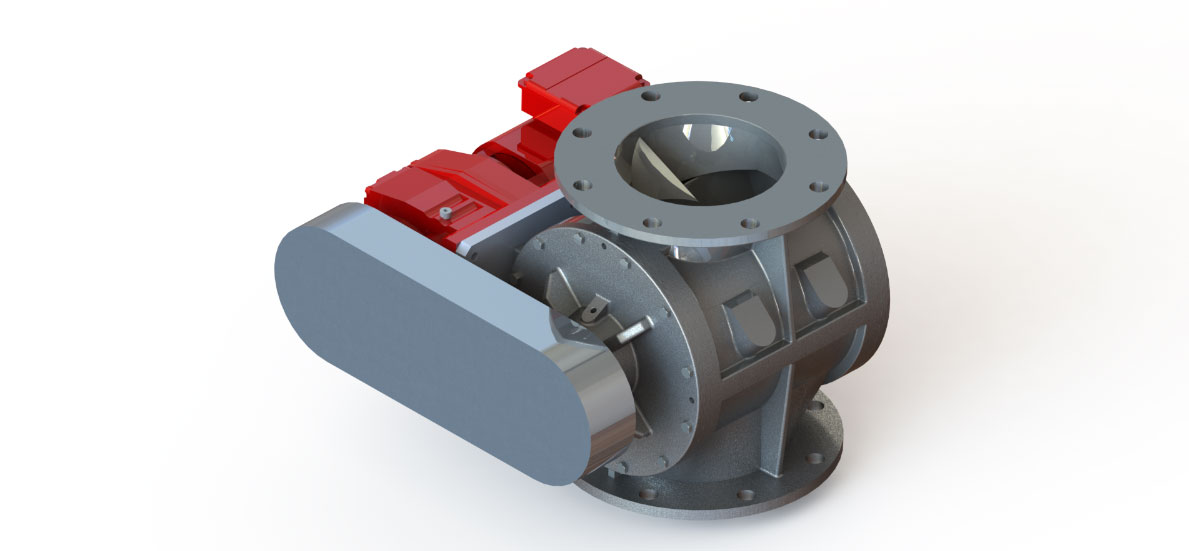
A rotary valve transfers material through pockets in a rotating rotor. At the inlet, pellets caught between the rotor tip and housing may be chipped or cut. DYPNF Non-Cutting designs are intended to reduce trapping and cutting through their inlet and rotor geometry. Pellet handling performance also depends on material characteristics, rotor speed and operating conditions.
DYPNF’s valve range is grouped by duty. The DYYMG and DYYHG series use a specially configured inlet and split-pocket rotor designed to minimize shearing of fragile pellets.
| Valve series | Application | Main feature |
|---|---|---|
| DYGM / DYGH | Pellets and granular materials | Standard rotary metering |
| DYYMG / DYYHG | Fragile pellet handling | Split-pocket rotor designed to minimize cutting |
| DYPM / DYPH | Powders and fine solids | Fine-material handling |
| DYDG / DYDP / DYDT | Diverting duty | Gravity or pneumatic service configurations |
When a rotary valve operates across a pressure difference, gas can leak through rotor-to-housing clearances. Leakage may interfere with pocket filling and effective capacity. Its quantity, venting and sealing arrangement should be reviewed for the specific duty.
Selection Questions
| Component | Review point |
|---|---|
| Rotary valve inlet and rotor | Pellet trapping, size and shape, inlet geometry, rotor speed |
| Pressure boundary | Operating differential pressure, gas leakage and venting |
| Capacity | Minimum, normal and maximum feed or discharge rates |
| Diverter valve | Pneumatic or gravity service, flow-path steps, sealing and position confirmation |
| Controls | Permitted changeover conditions and interlocks |
Diverter Valves and the Whole Conveying Line
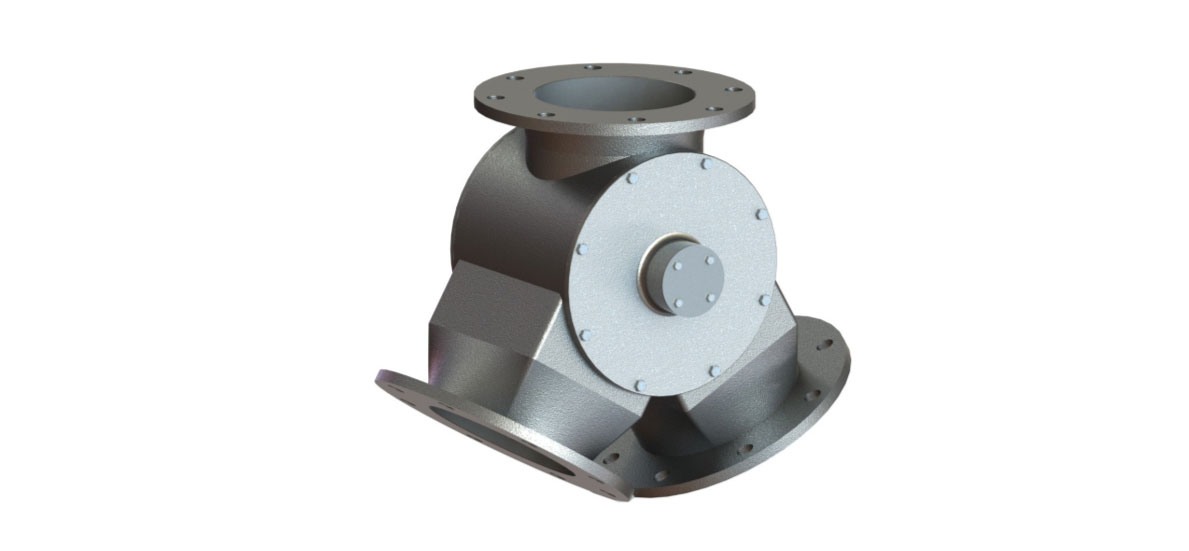
A diverter directs material among routes. Type and construction should reflect conveying method, pressure duty, material and changeover sequence. A plug or flat design is not selected solely by its name. Flow-path alignment and sealing must be reviewed for the actual installation.
Valve selection addresses local contact and leakage. Conveying velocity, bends, pipe surface and pellet temperature remain important elsewhere. For an existing quality problem, samples taken before and after suspected components, together with operating data and equipment inspection, can help locate the source of damage before equipment is changed.
DYPNF holds nine registered patents across its solid handling business.
Frequently Asked Questions
How can a rotary valve damage pellets?
At the inlet, pellets caught between the rotor tip and the housing may be chipped or cut as a pocket closes. Gas leaking through rotor-to-housing clearances can also interfere with pocket filling and effective capacity.
Does a Non-Cutting rotary valve remove the risk entirely?
No. DYPNF Non-Cutting designs are intended to reduce trapping and cutting through their inlet and rotor geometry, but pellet handling performance also depends on material characteristics, rotor speed and operating conditions.
Which DYPNF rotary valves are used for fragile pellets?
The DYYMG and DYYHG series use a specially configured inlet and split-pocket rotor designed to minimize shearing of fragile pellets. DYGM and DYGH are used for pellets and granular materials, and DYPM and DYPH for powders and fine solids.
How can the source of a pellet quality problem be located?
Samples taken before and after suspected components, together with operating data and equipment inspection, can help locate the source of damage before equipment is changed.
Related Documents
- Managing Angel Hair Across Large-Scale Polymer Plants
- Selecting Dense or Dilute Phase for Polymer Fluff and Pellets
- Designing Dust Collection Across a Bulk Solids Handling System
Engineering teams reviewing pellet quality in an existing or planned conveying line are welcome to discuss valve selection with DYPNF.