
📖 About 3 min read
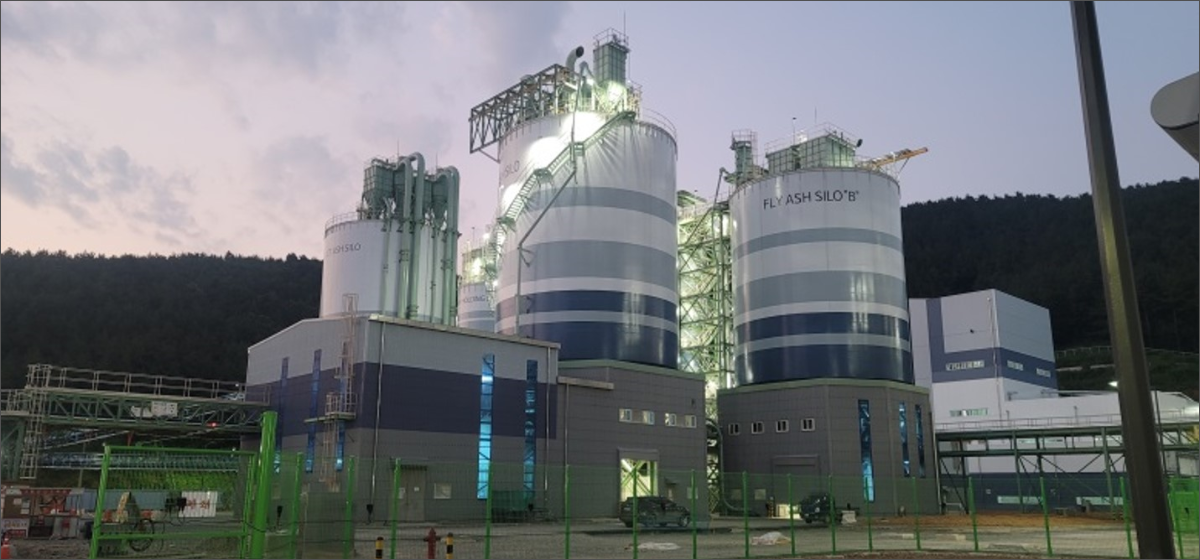
An ash handling system collects the ash produced by a coal-fired boiler, conveys it to storage, and discharges it for disposal or reuse. Its design starts from the plant’s capacity and ash generation and moves through conveying rate, storage silo volume, and discharge equipment. DYPNF Co., Ltd. (formerly Dong Yang P&F) has five ash handling system references, with transfer rates from 22.9 to 180.4 Ton/hr, a coal ash storage silo of 23,000 tons, and a power plant in Panama as its overseas reference.
| Category | Environmental Plant |
|---|---|
| Primary cause | A bottleneck at one stage limiting the whole collection, conveying, storage, and discharge chain |
| Key variables | Unit capacity, ash content of coal, operating load, holding time, and dispatch method |
| Fix level | Sizing from ash generation at the most demanding expected conditions, then matching transfer rate, silo volume, and discharge capacity |
| Verification method | Stage-by-stage capacity check against the design coal and load |
| Reference base | Five ash handling references: transfer rates 22.9 to 180.4 Ton/hr, 23,000-ton coal ash storage silo |
| Related standard | Project- and jurisdiction-specific |
What Does an Ash Handling System Include?
Fly ash is captured in hoppers under the particulate collection equipment and other gas-path equipment, then conveyed to storage. Blowers supply the conveying air, silos hold the ash until it leaves the plant, and discharge equipment loads it for transport or packs it. Each stage has to match the capacity of the stage before it.
| Stage | Main equipment | Design question |
|---|---|---|
| Collection | Hoppers | How much ash is generated at the design coal and load? |
| Conveying | Blowers and conveying lines | What transfer rate must the lines sustain? |
| Storage | Silos | How long must ash be held before it leaves the plant? |
| Discharge | Loading and packaging systems | How is ash dispatched, in bulk or packed? |
How Is an Ash Handling System Sized?
Ash generation depends on unit capacity, the ash content of the coal, and operating load, so the design basis is set from the most demanding expected conditions rather than average operation. The transfer rate follows from that basis, the silo volume follows from the transfer rate and the required holding time, and the discharge equipment follows from how and how often ash is dispatched. A bottleneck at any stage, such as a silo that fills faster than it can be emptied, limits the whole system.
What Does DYPNF’s Reference List Show?
| Project | Plant capacity | Transfer rate | Storage | Main equipment | DYPNF scope |
|---|---|---|---|---|---|
| Yeongheung coal ash storage and transfer | — | 166.0 Ton/hr and 22.9 Ton/hr | Silo storage capacity 23,000 tons | Concrete silo, hopper, blower | Design, supply, and installation |
| Shin Seocheon Unit 1 ash handling | 1,000 MW x 1 unit | 180.4 Ton/hr | — | Silo, hopper, blower, packaging system | Design, supply, and installation |
| Goseong Hi Units 1–2 ash handling | 1,000 MW x 2 units | 166.0 Ton/hr and 22.9 Ton/hr | — | Silo, hopper, blower, packaging system | Design, supply, and installation |
| Ash handling system, Panama | 150 MW x 2 units | — | — | Ash handling system | Design and supply |
| Gimcheon Energy ash handling | 56 MW x 1 unit | — | — | Ash handling system | Design, supply, and installation |
Frequently Asked Questions
What determines the capacity of an ash handling system?
The capacity is set from ash generation at the design coal and load, which fixes the transfer rate. Silo volume and discharge equipment are then sized to keep pace with that rate.
Does DYPNF have overseas ash handling experience?
Yes. DYPNF designed and supplied the ash handling system for a 150 MW x 2 unit power plant in Panama.
Can DYPNF provide design and supply without installation?
Yes. Most of DYPNF’s ash handling references cover design, supply, and installation, while the Panama project was delivered as design and supply.
Related Documents
- SCR, ESP and FGD in One Project — Why Flue Gas Treatment Upgrades Should Be Engineered as One System
Power plant owners and EPC teams sizing an ash handling system are welcome to review conveying capacity and silo storage requirements with DYPNF at the basic design stage.